Showing posts with label reading. Show all posts

9.23.2014

Banned Books Week: If It's Forbidden, Kids Are Interested

Introduce your students to banned books

Celebrate the FREEDOM to READ this week!

Pin It

In honor of Banned Books Week, I'm showcasing some of the books that have been banned or challenged over the years in my classroom.
Banned Books from www.hungergameslessons.com

Banned Books from www.hungergameslessons.com (Photo Tracee Orman)

Students are always amazed to see the many titles that make the lists. How could their beloved childhood favorites possibly be offensive? We discuss the reasons they are challenged and have great debates that usually end with students grabbing up the books and wanting to check them out.

The Hunger Games Trilogy Banned Books Week

Truly, Banned Books Week is a great way to get kids interested in reading (anything that seems remotely "forbidden" or offensive to adults arouses interest in teens).

Banned Books Week 2014
It's not too late to showcase some titles in your classroom. Even if you don't have the books, show students the lists and reasons (you can find links HERE on the ALA.org website).

You can also find FREE resources in my store for Banned Books Week.

4.18.2014

Popular Books for Teens

Popular books for teens

Pin It

Over the past year, these books have been the most popular in my classroom. Some are newer releases and some are older classics. But all have been either requested or checked out numerous times.

The Fault in Our Stars by John Green (or ANYTHING by John Green!)
Students who like TFiOS will probably check out his other books: Paper Towns, Looking for Alaska, Will Grayson, Will Grayson, An Abundance of Katherines

Students who like John Green books also seem to like the following reads:

Thirteen Reasons Why by Jay Asher

The Perks of Being a Wallflower by Stephen Chbosky

FanGirl and Eleanor & Park by Rainbow Rowell

Where Things Come Back by John Corey Whaley

It's Kind of a Funny Story by Ned Vizzini

Every Day by David Levithan

The Kite Runner by Khaled Hosseini

Miss Peregrine's Home for Peculiar Children by Ransom Riggs


It by Stephen King is a perennial favorite. Students also love Carrie and Christine.

Students who like Stephen King also seem to like:

V for Vendetta by Alan Moore and David Lloyd

The Watchmen by Alan Moore and Dave Gibbons

Crank Series by Ellen Hopkins

Slaughterhouse Five by Kurt Vonnegut, Jr.

The Alchemist by Paulo Coelho

The Mortal Instruments Series by Cassandra Clare (ALL of these books are popular and she continues to publish new ones)

The Infernal Devices Series by Cassandra Clare (Same with this series!)

Students who like Cassandra Clare's books also seem to love the following:

Vampire Academy Series by Richelle Mead

Beautiful Creatures Series by Kami Garcia and Margaret Stohl

Angel Burn Series by L.A. Weatherly (Angel Fire and Angel Fever)

(Not shown): Wolves of Mercy Falls trilogy, or the Shiver Series by Maggie Stiefvater (ShiverLingerand Forever)

On preorder (out July 1, 2014): Sinner by Maggie Stiefvater, which continues the Shiver story.


The Hunger Games Trilogy by Suzanne Collins is, of course, one of the most popular series in recent years. Even those who read the books in middle school love re-reading them in high school.

Students who like The Hunger Games also seem to like the following:

Divergent Trilogy by Veronica Roth

The Program by Suzanne Young

The Giver by Lois Lowry

The Legend Trilogy by Marie Lu

Dust Lands Series by Moira Young

The Maze Runner Series by James Dashner

Ender's Game by Orson Card Scott

The Harry Potter Series by J.K. Rowling

Ashfall Trilogy by Mike Mullin

Delirium Trilogy by Lauren Oliver

The Knife of Never Letting Go (Chaos Walking Trilogy) by Patrick Ness


A classic novel students read in 7th or 8th grade is The Contender by Robert Lipsyte.

Students who like The Contender also seem to like:

Jude by Kate Morgenroth

Gone by Michael Grant


The girls can't seem to get enough Nicholas Sparks novels. Favorites are:

The Notebook, Safe Haven, The Lucky One, and The Longest Ride

Students who like Nicholas Sparks also seem to like:

The Selection Series by Kiera Cass

The Matched Trilogy by Ally Condie

and any books by Sarah Dessen (not pictured).


For additional books that teens favor, check out these titles released yesterday by the Young Adult Library Services Association (YALSA):

YALSA 2014 nominations for Top Teen Reads


Which books do your students like? 
Leave a comment with your picks below. 

Thanks for stopping by!

11.25.2013

Incorporate Pop Culture into Your Curriculum to Connect with Teens

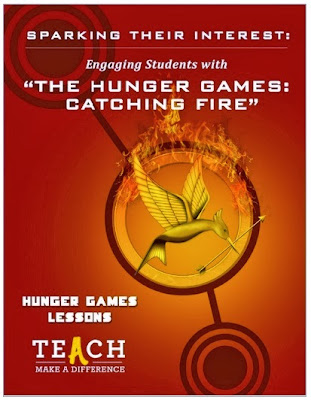
Sparking Their Interest: Engaging Students with "The Hunger Games: Catching Fire"

Pin It

Incorporating pop culture into your lessons has many benefits. The folks over at Teach.com and USC Rossier School of Education understand the impact it can have, which is why we teamed up to bring you this great free downloadable resource!

I'm so excited to share with you Sparking Their Interest: Engaging Students with "The Hunger Games: Catching Fire". Click on the link and you can read the articles and download the free resource. It includes numerous ways you can bring a spark to your lessons and watch your students become more engaged and vested into what you are trying to accomplish. (Download also found below.)

I Teach to Make Reading Fun!

If you teach The Hunger Games, Catching Fire, or Mockingjay, feel free to place the special button on your website, as well! Click on it to get the html code.


I hope you enjoy the FREE download! And I'd like to thank Stephan Maldonado and the folks at Teach.com for doing a fabulous job putting the packet together for all of you!

8.07.2013

How to Host a Non-Violent Class Hunger Games

How to Host a NON-VIOLENT Class "Hunger Games"

Pin It

If your students are anything like mine, one of the first things they ask me is if we get to have a class simulation of the Games while we read The Hunger Games Trilogy. Even after they find out that I don't allow a recreation of the Games because it would defeat the purpose of the novels, they continue to ask me EVERY SINGLE DAY if they can "fight" each other with toy weapons, or wrestling matches, or air-soft guns. I just shake my head.

I've always been adamant about stressing the theme of non-violence throughout the unit. But...they are typical students who want an excuse to "goof around" in class. And I do like to give them opportunities to get up, move around, have fun...but learn something while they're doing it. Nothing is learned by giving them fake weapons and simulating a "Hunger Games" activity. Or at least not what I want them to learn.

How to host a non-violent Hunger Games class activity from: www.hungergameslessons.comYou know your students want to compete in some way, but how can you give them that thrill of competition in a non-violent way?

How about trying one of these ideas:

-Food Drive competition: It literally IS the Hunger Games.

-The Academic Games: Use trivia questions from the novel; ask each student a question. If they answer correctly, they stay in the game. If they get it wrong, they're out. Last one standing is the victor.

-The Spelling Tracker Jacker: Not quite the same ring as a spelling bee, but like the "Academic Games," students would spell words from the novel to compete. Imagine throwing them off with Suzanne Collins' spelling of "muttations." Bahahaha...(that's my evil President Snow laugh, by the way).

-The Training Games: For those who still need that physical challenge, focus on training skills where students compete against one another in various physical challenges that test their agility, speed, accuracy, and endurance.

-The Sponsorship Challenge: Have students work in groups to create marketing campaigns for the Tributes from the novel(s). The can create an entire campaign, including a TV ad-spot, billboard, podcast, and more. Students can vote for the tribute they would sponsor based on the campaigns.

-Surviving the Games: Create a series of survival challenges for teams of students. These can include activities like knot-tying, plant and insect identification, shelter building, and more. As an alternative to survival skills, try group challenges that allow students to rely on one another to complete. Using these team-building activities allow for collaboration and bonding between your students.

In my next post, I will share the activities I used with my classes and show you how you can implement them into your curriculum.

Make sure you follow me so you know when I post next!

6.09.2013

Do You Teach the Classics?

Do You Teach the Classics? {Read more on www.hungergameslessons.com}

Pin It

My friend Ruth from Teacher Park asked a group of fellow teachers whether we noticed a decline in classic literature being taught in school and what our thoughts were on the topic. This brought up some strong feelings, so I thought I would share and ask that you weigh in by commenting below.

I agree that there is probably a decline in the teaching of classic literature in schools today. I do not have hard facts to prove it, but I communicate with many teachers from all over the United States and many are teaching contemporary novels. Does this mean that they have cut all classics from their curriculum? Absolutely not. I still teach a variety of classic works, including The Tragedy of Julius Caesar by Shakespeare, To Kill a Mockingbird by Harper Lee, stories by Poe, poems by Whitman, and so on. Yet, I supplement them with many contemporary works, as well. Are they "classics"? No. Or, at least, not yet.


Students won't score high on reading tests if they don't read the classics! 

To those who think reading the classics increases reading scores, here's a news flash: Students who read score higher on reading tests. It does not matter what they are reading. The more they read, the more they succeed. Period.

Teaching contemporary literature along with the classics is a good thing. Why? Because students are more likely to read newer works. If our goal is to produce better readers, students must practice reading.  I cannot force students to read. Sure, I can assign reading as homework; but if they don't want to read the novel, they aren't going to read at all. Well, they may read the Spark Notes summaries if I give them assignments or quizzes; but most likely they'll ask their friends, or look up answers online to avoid--at all costs--reading the very boring piece of classic literature I assigned. So why bother when I can assign a book they truly find appealing? If the novels' themes are the same, are both rich with figurative language, and both offer opportunities for in-depth analysis of characters, symbols, and plot, then why shouldn't we teach the contemporary novel over the classic if it means more students will read it, appreciate it, and love it?


Do students have to read the classics to become better readers?But are contemporary novels rigorous enough for today's standards?

Some may believe that contemporary novels are not rigorous enough for our students. But instead of criticizing the novels, we should evaluate the way we assess students' reading skills. A good contemporary novel will have all the attributes of a classic, so as long as we are asking challenging questions that practice critical-thinking and close-reading skills, we are increasing the rigor. It should not matter the age or the Lexile® score of the novel. (Don't get me started on Lexile® scores!)


Students won't be prepared for college if they don't read the classics.

And probably the most convincing evidence I have that more contemporary works should be taught is through my own high school experience. I was in school in the 80s. The most recent work of fiction we read was To Kill a Mockingbird, which would have been 25 years old when it was assigned my junior year. And the only book I remember reading in middle school as part of the curriculum was The Outsiders by S.E. Hinton. I don't think it's a coincidence that the two novels that influenced me the most were the only "contemporary" novels my teachers introduced.

Pin ItWe read classics like The Grapes of WrathOf Mice and MenThe Old Man and the SeaMacbethThe OdysseyThe Adventures of Huckleberry Finn, and so on. And I hated them. With a passion. They did not inspire me to seek out additional works by the authors for pleasure reads. I continued to read the types of books I was exposed to, which consisted of mainly Danielle Steel and V.C. Andrews novels. Contemporary classics they were not. Had I been exposed to more recently-published works that were intelligent and thought-provoking, I would have chosen better books to read in my free time. Case-in-point: in college I was introduced to Neuromancer by William Gibson, A Thousand Acres by Jane Smiley, and Kurt Vonnegut, Jr.'s Slaughterhouse Five, which is still one of my all-time favorite books. I began reading more science-fiction (which I had never read before) and fell in love with contemporary authors like Amy Tan, Gwendolyn Brooks, and Maya Angelou.

Many teens are not ready to read the classics. Whether it's because they are not yet mature, lack world experience, or just don't have the patience or will, forcing them to read a classic can cause a lifetime of hatred toward a book or reading in general.


If it's popular, it can't possibly be good...

People have this stigma that if a book is "popular"or a best-seller, it cannot possibly be considered good enough to be classic. And I have to say that misconception ticks me off. It's basically saying that the large majority of people buying the works aren't smart enough to recognize a good book. Perhaps a hundred years ago this was the case. But not today. Perhaps the contemporary novel we read today may very well be a classic in 50 years. I think works such as Tan's The Joy Luck Club and Khaled Hosseini's The Kite Runner are pieces that will endure. Since I've devoted the past four years teaching and blogging about The Hunger Games trilogy, it's probably obvious I think Suzanne Collins' work will stand the test of time in the young adult genre, as well.

In 1936, readers of The Colophon, a book magazine, were asked which contemporary authors would have lasting works. Even though the author of an editorial in The Smithsonian states that many of the writers on that 1936 list are not well-known today, I recognized all but one name. The readers were actually pretty good at spotting authors whose works will be read 100 years later.

If anyone is qualified to recognize a classic, it's the people who read both classic and contemporary works every day. When I read Angela's Ashes by Frank McCourt, I knew it would be a classic. My first impression of Divergent by Veronica Roth was mediocre, at best. It lacks the depth of a good classic read. I can't pinpoint what it is that makes a book a classic or not; call it a gut-feeling. But I think we English teachers are probably some of the most qualified groups of people to determine the classic-status in a novel, don't you? In which case, you should trust your gut and teach what you think your students will read and appreciate, not necessarily what others think should be taught.

Share your thoughts!

So what do you think? Do you teach contemporary works along with the classics? Share your thoughts and opinion below.

3.02.2013

Meme Assignment Your Students Will Love


Assignments Your Students Will Love

Pin It
Teaching the second half of the year is always the most challenging. We have fewer breaks and we all tend to get spring fever. If you have seniors, there's also the dreaded "senioritis" they all seem to come down with. (I think my seniors had it by the second week of school.)

It's even more important during this time of year, though, to offer engaging assignments they want to do. Yet, it's hard coming up with new ideas. Instead of trying to create them all yourself, just get to know your students. Last year when my students were fixated with websites like High School Memes, I decided to utilize that obsession with a meme assignment: create a meme related to the chapter we just read. I expanded the activity when I posted my "Meme Activity..." in my teacher store, which includes a presentation on what memes are, an icebreaker meme assignment, and a mini-research project about memes. It's a versatile bundle that any content teacher can utilize in class. I also have a full set of classroom posters teachers can download with popular memes I created. Check them out here: Teacher memes for classroom display or presentations.

Recently, my seniors made some memes based on Part I of Catching Fire. Some made additional memes for The Hunger Games, and some--who have read the entire series--were excited to create memes for the rest of Catching Fire and Mockingjay. I won't post those yet, but I do want to warn you if you haven't read Catching Fire: spoilers ahead!
Catching Fire Memes - Created by Students
Pin It

You might be wondering, "What are the educational benefits of assigning a meme?" That is a valid question. Looking at the finished product, you probably won't see the learning process that went into it. But if you observe your students while they are working on them, here's what you'll find:
• Students re-reading the text to find something they can parody or reference.
• Students asking one another questions, such as, "Which character said...?" and "Didn't this event take place at...?" and "Why didn't you use this picture? Doesn't it go better with that scene?"
• Students using technology to create the actual meme (some used meme generators online, while others found images and used programs on their MacBooks to add their own text, such as Adobe Photoshop, Adobe Fireworks, or Pages).
• Students editing their own work and peer editing one another's. (I stipulated that they needed correct spelling and usage, though some misspellings, like "Capitol" with an "a" instead of an "o" slipped through.)
• Students critiquing one another's finished product and offering suggestions, even explaining and justifying their choices.

Not only do they allow students to engage in critical analysis of each other's work, they also offer opportunities for deeper class discussions. Memes mimic real life; touchy topics are exposed, opening up your classroom to complex conversations you may have otherwise skipped.  

Use Memes to Discuss More Serious Topics in Class
Pin It

Do you use memes in class? Comment below and see my Facebook page for more conversation about using memes in class.

Assign a Meme for a Chapter Summary or Review
Pin It
And one last thing: not all of the memes students turn in will be school-appropriate, no matter how many warnings you give them. For some students, they honestly don't realize where they crossed the line. For others, they are just testing the waters. I let them state their justification for using it and ask if there would have been a better way to say the same thing without losing the point. Some students made great arguments; others, not so much. But I believe in giving them the opportunity to be responsible rather than eliminate the activity all together. Here are a few that were questionable for various reasons. (Keep in mind these were made by 17, 18, and 19-year old students, so I'm more accepting of things that I wouldn't allow in my other classes.) Frankly, they still made me laugh!
Catching Fire Memes #HungerGames
Catching Fire meme: Romulus Thread #HungerGames

Pin It

Meme Activity for class includes:
Engaging Meme Activity for Any Class

Engaging Meme Activity for Any Class with Teacher PresentationMeme Activity with Student Templates You Can Share Electronically

Meme posters for your classroom:

Teacher memes posters bundle


8.14.2012

Mrs. Orman's Classroom: I Know What You Read This Summer


Mrs. Orman's Classroom: I Know What You Read This Summer: I Know What You Read This Summer

A simple way to encourage reading is to have your students suggest good books to their peers. I made this poster you can download for back-to-school. You can also read more on my other blog by clicking the link above. Have a great school year! 


Pin It

10.06.2011

Using Twitter to Engage Your Student Readers


One way to engage student readers is to find ways to connect with them. Social media is big in their lives, so using sites like Facebook.com and Twitter.com help bridge that understanding between the content they are reading and applying it to their own lives.

Last January I wrote how creating a Facebook profile and status updates was effective with my students (post found here). Another way to help them make a connection (or at least give them an opportunity to be creative and have a little fun while learning) is by using Twitter. More and more young people are using the site (perhaps Justin Beiber's presence on Twitter has helped that). When I first started doing this Twitter activity, none of my students were on Twitter. Now, it seems at least a few are and most understand the concept.

After reading a chapter in a novel, I tell them to pretend they are one of the characters from that chapter. Then I tell them to pretend that character has internet access (it's kind of funny to imagine someone like Scout in To Kill a Mockingbird's 1930's setting to have internet). Then, pretend that character has an Android or iPhone (or another smart phone) and is about ready to post a new Tweet on Twitter. What would they write?

This assignment allows the student to think about the most important events in a chapter, analyze the events and the character's actions, then summarize it (in a concise manner). It also requires them to use precise words and try to engage their audience.

SPOILER ALERT! - Avoid reading if you haven't read through chapter 11 in The Hunger Games
Here's a sample I made after reading chapter 11 in The Hunger Games by Suzanne Collins. I took on Katniss's persona:

And here are some sample tweets my students came up with after reading chapter 11 (I chose this chapter because it's the first day in the arena:

Katniss: @KatnissEverdeen I NEED WATER!!! #Dying

District 2 Girl (they don't know her name...yet): @KnivesRMyThing Stabbed a boy in back...freakin' D12 girl got away, though.

Thresh: @11 Survived first day. What up?! #BigAndSilent

District 9 Boy: @ImGonnaWin Got this great backpack, just need this girl to let– #DEAD

Katniss: @TooHot4U First day over. Not dead yet.

Katniss: @BowHunter_12  In a tree, near an idiot, and thirsty. #thissux

Rue: @LikeABird11 I'm hiding in a tree tonight. Grabbed some berries and got a knife. #Survivor

Peeta: @YeastieBoyYO! Caught her lighting a fire at dawn. #AreYouNew?

Girl Tribute Who Lit the Fire: @SmokeSignalsRUs I'm so cold. A little fire won't hurt anything, right!? #DarwinAwardWinner

You can download the FREE printable activity--which includes teacher instructions and alignment with the Common Core Standards--in my teacherspayteachers.com store: http://www.teacherspayteachers.com/Product/Twitter-Tweet-Story-or-Chapter-Summary


9.24.2011

Celebrate the Freedom to Read During Banned Books Week


This week kicks off the ALA's Banned Books Week, which celebrates "our First Amendment freedom to read while drawing attention to the harms that censorship does to our society and our individual freedoms" says Molly Raphael from The Huffington Post. Did you know The Hunger Games by Suzanne Collins made the list of challenged books for 2010-2011 according to the American Library Association (ALA)?

It's ironic, isn't it? Censorship and suppressing information is very President Snow-like. Do we want to live in Katniss's world? In Panem, where the government decides what we can read, what we can learn, and who we are allowed to communicate with?

One would think in the year 2011 that censorship would not be an issue, but it is. Attempts to suppress literature and other materials is actually more prevalent than you might think.  The ALA reported that there were 348 challenges to books last year alone. The majority of the challenges are initiated by a parent, directed toward a school and/or school library, and are instigated because of the objection of sexually-explicit material in the book (this refers to books that are labeled as age-appropriate, NOT books that are clearly not appropriate for the age group). For example, The Diary of Anne Frank by Anne Frank is one that was challenged for sexual explicitness and deemed inappropriate for 8th graders in Culpepper, Virginia in January, 2010.

Let's compare reading a book in school to a doctor giving a vaccination shot, which are known to prevent illnesses and disease. Many parents object to giving their children vaccinations. They have that right to make that decision for their own child. But it would be absurd to stop offering vaccinations to everyone because one or more people objected. The benefits are far too great, right? So are the benefits of reading a novel: One book can open up a world of possibilities. One book can help someone cope with their own pain and loss. One book can prevent someone from harming another, or themselves. One book can convince someone that it's OK to be different. One book can inspire. One book can change someone's life. And, chances are, it's a book that someone else wants to prevent you from reading.

In my experience, many people who object to the content have not actually read the book in its entirety. Too often, parts of a novel are extracted and used as evidence of inappropriateness. An entire piece of literature cannot be judged by one passage or quote; the themes and purpose of the novel need to be considered before judging. So to grasp the full meaning, one must read the entire work. In fact, most of the books that are challenged are against the very thing they are accused of promoting. You can read more in my previous blog post about those who challenge The Hunger Games.

This does not mean that I don't believe parents have a right to decide what is appropriate for their child. I believe they do. However, they do not have a right to impose that belief on all children, or all people, for that matter. At our school, if a parent objects to a novel we are teaching, the student is given an alternative substitution that deals with similar themes. The book is not removed from the classroom or from the curriculum.

What is your school's policy? Has The Hunger Games been challenged by any parents? How have you responded? Do you fear it could be challenged? If so, make sure to read my previous post and feel free to contact me if you need additional support.


you can print & distribute. :) Enjoy!


8.07.2011

Hunger Games Posters to Download


   I created some Hunger Games-themed reading posters for your classroom. Download them now HERE while they are listed as FREE. There are 16 printable posters, some as 8 1/2 x 11 (letter size) and some as 8 1/2 x 14 (legal size).

Laminate them for longevity.

Have a great school year!

6.16.2011

It's a Literacy Revolution & You're Needed!

Join the Literacy Revolution


Katniss fueled the spark that began the revolution in The Hunger Games trilogy. Whether she meant to or not, wanted to or not, she became the symbol of the rebellion; she became the mockingjay.

While Katniss's revolution is fictional, there's a real one going on right now. It's a literacy revolution. Shylah is the author and creator of the blog A Tribute to Tributes. She spear-headed the literacy revolution after reading the series and feeling as though the trilogy needed to end in a happier or more hopeful way. A way in which good trumps evil.  And she also knew that one of the best ways to build a strong nation and end poverty and oppression is through education. "Education powers revolutions." (I'm With the Mockingjay)

That led her to the DonorsChoose.org website, where she found a teacher who only needed $100 to fund her project of 35 copies of The Hunger Games for her high-poverty, under-funded school. The teacher knew that her students would be able to relate to the themes of injustice and oppression. With Shylah's help, the project was funded & the students got their books.

But she hasn't stopped there; she is continually seeking out teachers who need their projects funded. Ones that will share the love for The Hunger Games with hundreds, probably thousands, of children. It is a revolution that is seeking your involvement, your generosity.

She explains on her blog the purpose of the project:
"Our goal is simple. As Hunger Games fans who believe in equity and empowerment, we will work to fund as many as possible of the requests for Hunger Games books posted on donorschoose.org. We’ll take it one class at a time—just as Katniss and the Rebels worked District by District to overthrow the Capitol."

Imagine how many students will begin to love to read again after reading The Hunger Games in school.  Imagine what just one person's generosity can do for all these children. And, in turn, what it could do for generations of children. When you give to a project, you are not only helping that classroom of children, you are helping the future. Those children will remember your generosity and pass it on to their children. And a new cycle will form. One that spreads literacy and a love for reading. One that could mean a way out of poverty for many children. Because without reading skills, we all know how limited our choices, our world, becomes.

Visit the Literacy Revolution site; Shylah has links to classroom projects that need your funding. And when you donate, don't forget to add the following to your personal message:

“I gave to this project because I'm with the Mockingjay, and support a literacy revolution in American classrooms.”

(Source: Literacy Revolution)

2.26.2011

A Huge THANK YOU to the 2,000+ Teachers...

...Who have purchased my digital download Hunger Games Teaching Unit!

Yesterday I sold my 2,000th unit on the TeachersPayTeachers website! I wanted to take a moment to thank all of you who have purchased my materials and also to Paul Edelman, founder and CEO of the TeachersPayTeachers website. Without Paul's persistence, determination, and of course his support of all the teachers, this would never have been possible.

This is a website that Edelman, a former NYC teacher, founded because he believed teachers not only deserved affordable lessons written by other teachers (who have first-hand knowledge of what works in the classroom), but that we should be rewarded for our hard work, as well.

It's a win-win situation. Most of us design a majority of our own handouts and even write supplements to the text and materials in our classes. We aren't reimbursed for creating these materials, which usually are created at home rather than school, and often in the summertime or over holiday breaks. We do this additional unpaid work because many of the publishers' materials just don't fit our classes and/or students. And if we are teaching a newer novel like The Hunger Games by Suzanne Collins, the resources are limited, so we have no choice but to create our own materials if we want to teach it.

Teaching a novel unit takes time. A lot of time. It's not as simple as just coming up with a list of questions for students. You have to introduce the novel and get the students to buy into the reading. You have to discuss the setting: time and place, the narrator and point of view, the main characters. You need to go over words they may not know. You have to engage them in some sort of activity to motivate them to want to read on and you must assess their learning: do they understand the plot? the theme? the symbolism? the figurative language used? the motivations of different characters? the author's purpose?  the connections to their own lives?

It is a daunting task. Which is why in the past I hesitated to teach new novels. I have a family; I'm married to a coach. On top of that, I teach high school English. I can barely find time grade papers, let alone write a novel unit!  But The Hunger Games changed everything for me. I knew it was a book my students would love, so it was worth the sacrifice. I started writing lessons and making handouts in August of 2009.  I continued on to write two more units to complete the trilogy, finishing Catching Fire in April 2010 and Mockingjay in December. (I must admit it took me the longest because there is so much to talk about in Mockingjay!) My students have loved reading all three books in class and my mind still runs on overtime thinking of different things I can do with the next group I teach.

Needless to say, I never dreamed it would be possible that over 2,000 teachers would be using my unit in their classrooms and that it would be the #1 best-seller of all-time on the TeachersPayTeachers website within a year of posting it. I think it speaks volumes what a wonderful novel this is to teach. Suzanne Collins has been able to appeal to so many of us with her brilliant writing. If I ever get the opportunity to meet her I don't think I'd be able to thank her enough for writing this series. Not many writers can appeal to so many levels of readers and on so many levels!

And again, I want to thank all of you teachers who are teaching The Hunger Games in your classrooms. Even if you've never purchased any of my products or used any of my free activities, I still thank you for introducing this novel to your students. You are encouraging a love for reading in all your students.

By the way, to stay up-to-date with my latest products and free downloads, Follow Me on my TpT page, Facebook Page, and you can find me on Twitter: @MrsOrman.

1.02.2011

New Mockingjay Materials Uploaded


I've uploaded several new Mockingjay files this past week, including my complete teaching unit today: http://www.teacherspayteachers.com/Product/Mockingjay-Novel-Teaching-Unit-Tests-Questions-Projects-Vocab

I will also be offering a 3-pack of CDs: buy the entire Hunger Games Trilogy teaching unit for a discounted price. The Mockingjay CDs will probably be ready to send out later this week. I am adding a presentation to the files, which has taken me a little longer to create.

Here are the links to some of my newest materials:

Digital Download:
http://www.teacherspayteachers.com/Product/Mockingjay-Novel-Teaching-Unit-Tests-Questions-Projects-Vocab 

Mockingjay Unit on CD:
http://www.teacherspayteachers.com/Product/Mockingjay-Teaching-Unit-On-CD-with-Bonus-Lessons-Presentations


All Three Units on CD: The Hunger Games, Catching Fire, and Mockingjay:
http://www.teacherspayteachers.com/Product/Hunger-Games-Trilogy-Teaching-Units-3-CDs-plus-Bonus-Lessons

Chapter Questions:
http://www.teacherspayteachers.com/Product/Mockingjay-Chapters-1-27-Questions-Handouts-Teachers-Guide

Parts I, II, and Final Tests:
http://www.teacherspayteachers.com/Product/Mockingjay-Part-I-Test-Study-Guide-with-Key
http://www.teacherspayteachers.com/Product/Mockingjay-Part-II-Test-with-Bonus-Activities
http://www.teacherspayteachers.com/Product/Mockingjay-Hunger-Games-Trilogy-Final-Exam-and-Study-Guide

Character Identification Review Activity:
http://www.teacherspayteachers.com/Product/Mockingjay-Character-Identification-Review-Hunger-Games-Trilogy

12.22.2010

After Christmas Sale on Teachers Pay Teachers

Use Promo code C2N5Y to get 15% off on everything through Jan. 2nd, 2011 on teacherspayteachers.com

In addition to the site's sale, I'm having a special on my shipped goods!

To thank all of you for being excellent customers throughout the year, from December 26th through January 2nd buy any CD or bookmark (any shipped product) and receive a FREE bookmark and Bonus Lessons CD! You can find my shipped goods here: hard goods or go directly to my TeachersPayTeachers store.  

The bonus lessons CD contains numerous graphic organizers, writing prompts, reading assessments, and more. 

Thanks, again, and have a Happy New Year!
Related Posts Plugin for WordPress, Blogger...